Intro: The “Agbo” Revolution
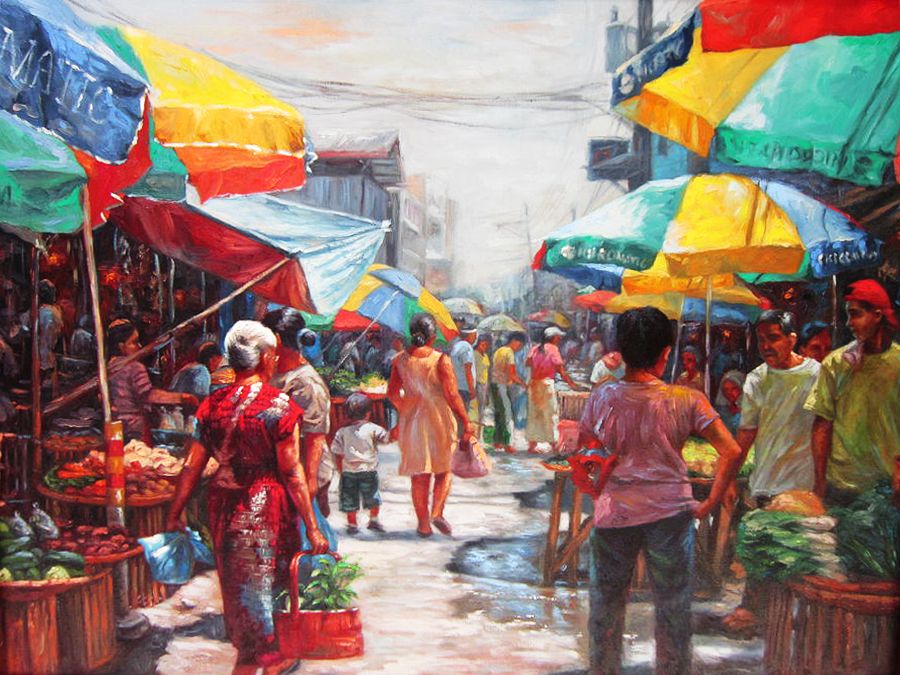
If you walk through Orieagu market or stand at a bus stop in Lagos at 6:00 PM, you’ll see them: small green bottles and sachets changing hands rapidly. In Nigeria, “Bitters” are more than just a drink; they are a cultural phenomenon. What started as traditional Agbo (herbal concoctions) sold in clay pots has evolved into a multi-billion-naira industry of branded, bottled spirits. But somewhere between the tradition and the trendy packaging, the truth about what’s inside those bottles got lost.
What People Think Bitters Do
Ask any regular consumer why they take a shot of bitters before a meal (or a night out), and you’ll likely hear one of these three myths:
- “It Cleanses the System”: The most common belief is that bitters act as a “detoxifier.” People believe the bitter taste “washes” the stomach and flushes out sugar or “impurities.”
- “It Boosts Energy & Manpower”: There is a heavy marketing slant—often subtle but understood—that bitters improve sexual stamina and “libido.” This has made it the go-to drink for men looking to prove their “virility.”
- “It Heals Everything”: From waist pain to malaria, many believe these drinks are a liquid pharmacy. The logic is simple: “If it tastes this bitter, it must be working.”
What Bitters Actually Are
Let’s strip away the marketing. What is actually in that bottle?
- High-Proof Alcohol: Most popular bitters in Nigeria contain 30% to 45% alcohol (ABV). To put that in perspective, a regular beer is about 5%. When you drink bitters, you are essentially drinking a flavored gin or spirit.
- Herbal Infusions: They do contain real herbs—like Ginger, Kola nut, Aloe, and Clove. While these herbs have individual benefits (like ginger for nausea), they are often present in such small amounts that the alcohol hits you long before the herbs do.
- The “Cleanse” is a Laxative: Many bitters contain Aloe ferox or other natural laxatives. That “cleansing” feeling people talk about is actually just the drink speeding up their bowel movements.
The Heavy Hitters (Popular Brands)
In 2026, the market is crowded, but three names still dominate the Nigerian psyche:
| Brand | The “Vibe” | The Reality |
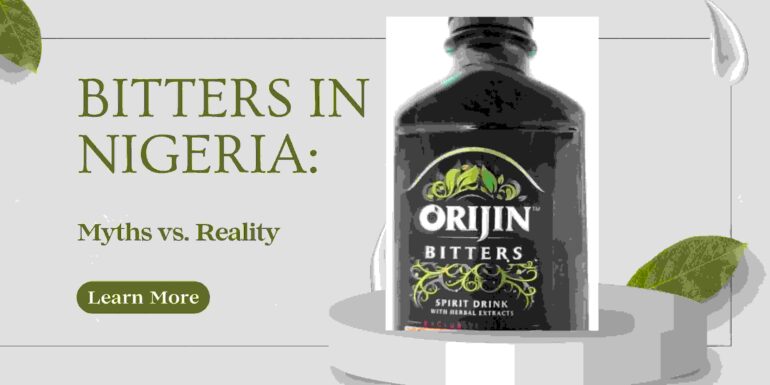
| Orijin | The “Modern Agbo” for the sophisticated youth. | A bittersweet spirit (6-30% ABV) that uses fruit and herb extracts. |
| Action Bitters | The “Manpower” king. Often sold in sachets. | Very high alcohol content (approx. 40%) often used as a quick energy “hit.” |
| Alomo Bitters | The Ghanaian OG that started the bottled trend. | A herbal recipe focused on digestion, but heavily faked in the market. |
The Content Gap: The “Hidden” Risks
What the labels don’t tell you is the toll these drinks take on your internal organs.
- Kidney & Liver Stress: Recent studies in 2025/2026 highlight that the combination of unregulated herbs and high alcohol concentrations can lead to “Nephrotoxicity” (kidney damage). Your kidneys have to work triple-time to filter the heavy herbal extracts.
- Sugar Logic: Ironically, people drink bitters to “wash away sugar,” but many brands actually add sugar or caramel to make the drink palatable. You aren’t “washing” sugar; you might be adding to it.
Why Are They So Popular?
It’s not just about the “health” claims. Bitters are popular because:
- Affordability: You can get a sachet for the price of a bus fare. It’s the cheapest way to get “high.”
- Social Identity: Drinking bitters says you are “rugged” and connected to your roots. It’s an “Elite” version of the local Agbo seller.
- The Taste: Nigerians have a palate for “bittersweet” (think of how we love Guinness). Bitters hit that exact spot.
Conclusion: Bitters are Culture, Not a Cure
Bitters are a part of our heritage, and in moderation, they are a great social lubricant. But let’s be clear: Bitters are a vibe, not a medicine. If you have waist pain, see a doctor. If you want to “cleanse” your system, drink water and eat fiber.
Enjoy your Orijin or Action Bitters for the taste and the friendship, but stop treating your liver like a laboratory.